
1. The Power of the Generative Question
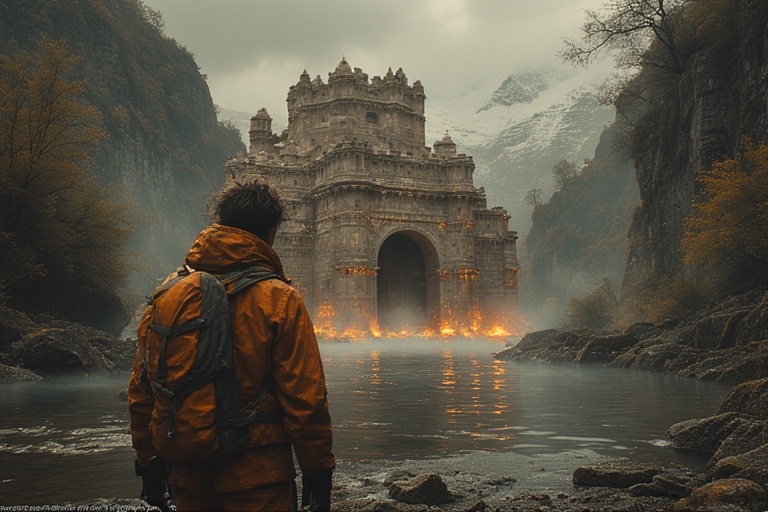
In educational psychology, we recognize that the most formidable barriers to growth are not environmental, but are instead found within our rigid cognitive schemas. These internal frameworks often operate within a binary of certainty that limits our potential. The source material invites us to approach the “Gate of Possibilities,” a mental threshold currently barred by the definitive statement: “It is impossible.” To unlock this gate, one must employ generative questions that disrupt current belief systems and catalyze a shift in our psychological architecture.
These “What if” scenarios are designed to provoke cognitive dissonance, forcing the mind to reconcile its current limitations with a boundless reality.
Provocations for the Mind
- What if you could live forever?
- What if you could reduce current diseases by 95%?
- What if death was merely a consequence of a lack of management?
- What if you could be truly happy—even if your mind immediately pivots to financial gain as a prerequisite?
- What if you could travel anywhere in the universe?
- What if you could meet the Divine without dying? (A question designed specifically to challenge the “blasphemy” threshold of your convictions).
The Fundamental Shift To assert “It is impossible” is to reinforce a psychological prison. To ask “What if?” is to open a dangerous but transformative gate where the parameters of reality are rewritten.

While these provocations generate an initial spark of excitement, we must address the underlying resistance: most individuals are terrified to entertain these thoughts because if they are true, the current foundation of their identity would crumble.
——————————————————————————–
2. The Victim vs. The Explorer: A Mindset Comparison
As specialists in growth mindset, we observe a sharp contrast between an external locus of control (the Victim) and an internal locus of control (the Explorer). Crucially, the source reveals that many people actively prefer the victim state. They derive a secondary gain—a form of psychological pleasure—from behaving as a victim because it grants them a “reason to feel good” about their stagnation. Choosing the “Explorer” path is perceived as “dangerous” because if the impossible is actually possible, then the comfort of excuses vanishes and total responsibility belongs to the individual.
Mindset Comparison: Victim vs. Explorer
| Feature | The Victim Mindset | The Explorer/Child Mindset |
| Core Belief | Fixed mindset; relies on external blame to justify “impossible” boundaries. | Growth mindset; views limits as temporary obstacles to be bypassed. |
| Reaction to Evidence | Emotional Volatility: Screaming, shouting “blasphemy,” and demanding endless proof to protect the status quo. | Childlike Curiosity: An eager drive to see what is behind the next corner, hill, curve, or obstacle. |
| Primary Goal | Seeking excuses and reasons to feel “good” about inaction. | Seeking the truth and the total assumption of personal responsibility. |
These internal frameworks dictate our immediate physiological and psychological reactions to real-world miracles and the irrefutable evidence of human progress.

——————————————————————————–
3. The Wall of Denial: Why We Reject the Impossible
Consider the case of a 30-year-old individual born with a debilitating condition. For three decades, every authority figure reinforced the “impossible” nature of their situation. When this person finally learns to walk, the “Victim” mindset does not celebrate; it recoils. Even when faced with the person standing before them—irrefutable evidence—the victim will shout for more proof or dismiss the event as blasphemy.
Why We Cling to the “Impossible”
- Threat to Life History: Accepting that the “impossible” has occurred places a massive question mark over your entire past. If it was possible all along, then your years of suffering or stagnation were a choice, not a necessity.
- Preference for Validation over Truth: The mind often doesn’t want evidence of what is real; it wants a “reason to feel good” by confirming that its limitations are justified.
- Addiction to the “Magic Pill” (Pilula Magică): There is a systemic preference for the shortcut—the belief that one can simply snap their fingers and “poof,” it is done. This prevents the engagement with the actual mechanics of reality.
This rejection of the miraculous is ultimately a sophisticated flight from the sheer weight of effort that the truth would demand of us.
——————————————————————————–
4. The Motor of Evolution: Responsibility and Effort
True psychological evolution requires paying the “Price of Growth.” This price is the abandonment of the victim’s pleasure in favor of the explorer’s labor. In the Romanian tradition, this is captured by the idiom “pui osul la treabă”—literally putting your back into it. Evolution is not a passive byproduct of curiosity; it is the result of total responsibility.
Key Takeaway Evolution is the synthesis of Childlike Curiosity (the “Child” who wonders what lies beyond the next hill or obstacle) and Adult Responsibility (the “Worker” who puts their back into the task). You cannot achieve the evolution of an explorer while maintaining the work ethic of a victim.
3 Steps to the Explorer Mindset
- The Second of Suspended Disbelief: For just one second, ask: “What if everything I have been told—and everything I think I know—is wrong?”
- Total Locus of Control: Stop seeking external entities, races, or circumstances to blame. Accept that if change is possible, the responsibility is yours alone.
- Active Curiosity: Reclaim the child’s perspective, becoming genuinely interested in the mechanics of the next “corner, hill, curve, or obstacle” in your path.
Every learner must eventually choose between the stagnant safety of victimhood and the “dangerous” but evolving path of the explorer.
——————————————————————————–
5. Synthesis: The Learner’s Path to Evolution
Evolution is not a “magic click” or a sudden epiphany; it is a conscious, disciplined choice to stop seeking the “magic pill” and start seeking the truth. It requires us to move past the emotional comfort of our limitations and embrace the rigorous demands of our potential.
Your Growth Checklist
- Deconstruct “Impossible”: Identify it as a cognitive defense mechanism designed to keep you “safe” and “feeling good.”
- Question Your Life History: Have the courage to ask, “What if the opposite of my current certainty is the actual truth?”
- Reject the Shortcut: Abandon the hope for the “magic pill” and prepare to “put your back into” your own evolution.
- Own the Outcome: Shift your locus of control entirely inward; if the gate is open, you are the one who must walk through it.
- Embrace the Obstacle: Look at every curve and hill as a curiosity to be explored, not a reason to turn back.
[…] The Radical “What If“: Deconstructing Current […]
[…] designed to reject. It begins with a series of questions that feel like heresy to the modern mind: What if you could live forever? What if you could travel anywhere in the universe? What if you could meet God without […]
[…] 4. The Dangerous Gate: Implications of the “What If?” […]